
10 Experiences Worth Having
If you searched "things to do in Costa da Caparica" and ended up here, you probably already know about the beach. What most people don't realise is how much happens beyond the towel.
We're Gecko Surf School. We live and work in Caparica — we know every sandbank, we know when the wind shifts, we know the local fishermen by name. So when people ask us what to do here besides sunbathing, we have a lot to say.
This is our honest guide. No filler.
1. Surf Lessons in Costa da Caparica — For All Levels
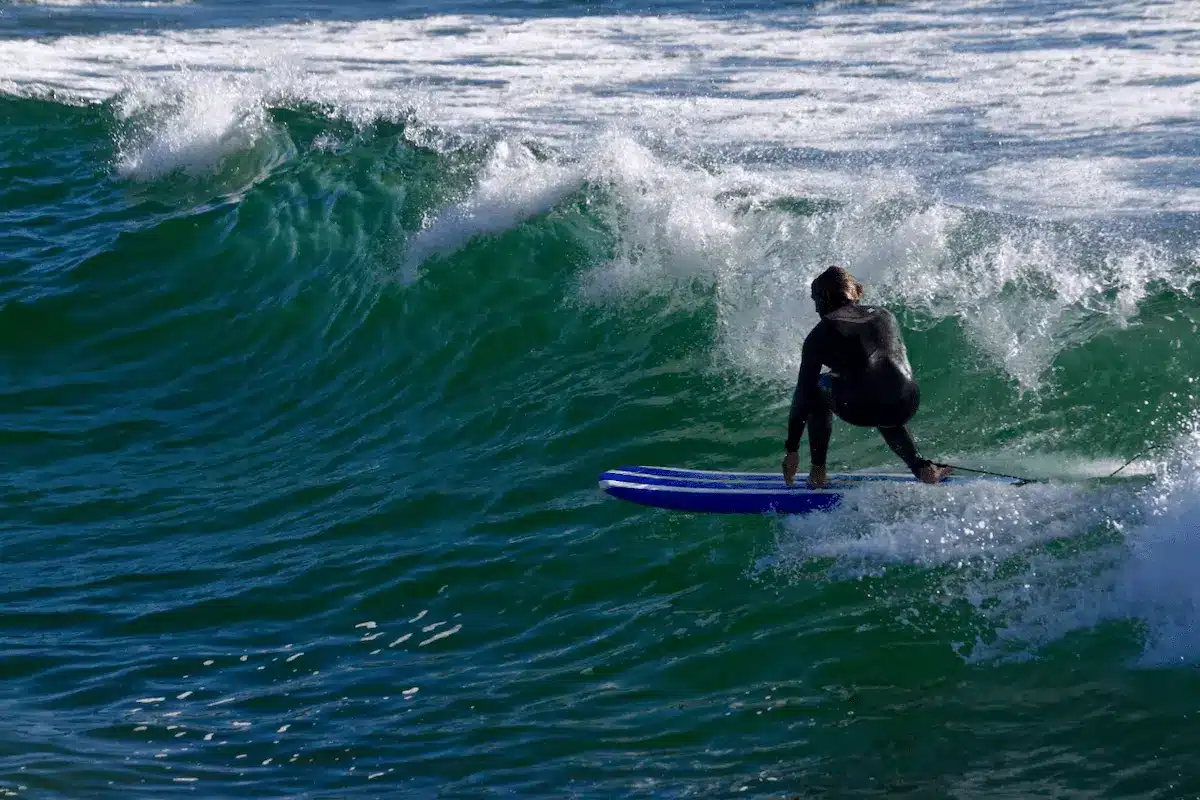
Costa da Caparica has some of the best conditions for learning to surf in Portugal. The sandy bottom, consistent waves and wide-open beaches make it ideal for beginners — without limiting the experience for more advanced surfers.
At Gecko Surf School, we run lessons for all levels — from first-timers who've never stood on a board to surfers looking to sharpen their technique. All instructors are certified by the Portuguese Surf Federation. Groups are kept small so every student gets real, individual attention. Full equipment is included.
What sets us apart? We work with the conditions of the day. The goal is to make the most of every session — not to stick to a fixed spot regardless of what the ocean is doing.
2. E-Bike Tours and Rentals — Gecko Bike Tours
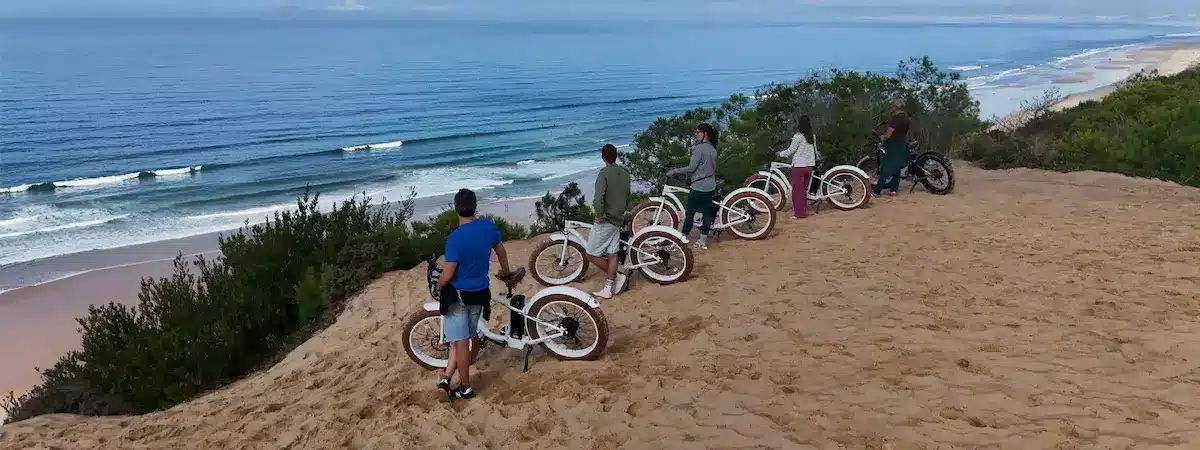
There's an unwritten rule around here: if you've only seen Caparica from the main road, you haven't seen Caparica.
Gecko Bike Tours runs guided e-bike tours along the coastline, through the Mata Nacional dos Medos (National Forest of the Dunes), and all the way to the Lagoa de Albufeira — covering spots most visitors never reach. Routes are accessible even to people with no cycling experience; the electric assist handles the hard part.
For those who prefer to explore independently, e-bike rental by the hour or by the day is the most efficient way to cover the coast without a car.
3. Kitesurfing — When the Wind Is Too Good to Waste
The summer north wind that keeps swimmers away from Praia Nova is exactly what kitesurfers are looking for. It's consistent, not too strong, and the beach has enough space for beginners and experienced riders to share without getting in each other's way.
Local schools offer beginner lessons with equipment included and certified instructors. For those with some experience, it's one of the best spots in the Lisbon area to fly.
Even if you have no intention of trying it: on a windy day, watching the coloured kites in the air is one of the best free shows Caparica has to offer.
4. Paragliding — The View Nobody Talks About
Most people don't know that paragliding is possible in the Caparica area. It is. And the view from up there is something else — 30 km of coastline on one side, the Tagus estuary on the other, and on a clear day, the Serra da Arrábida mountain range in the distance.
Tandem flights require zero prior experience. You go up with a certified instructor, take off together, and spend the flight doing what everyone does up there: looking down and realising you'd been underestimating this place.
5. Arte Xávega — See This at Least Once
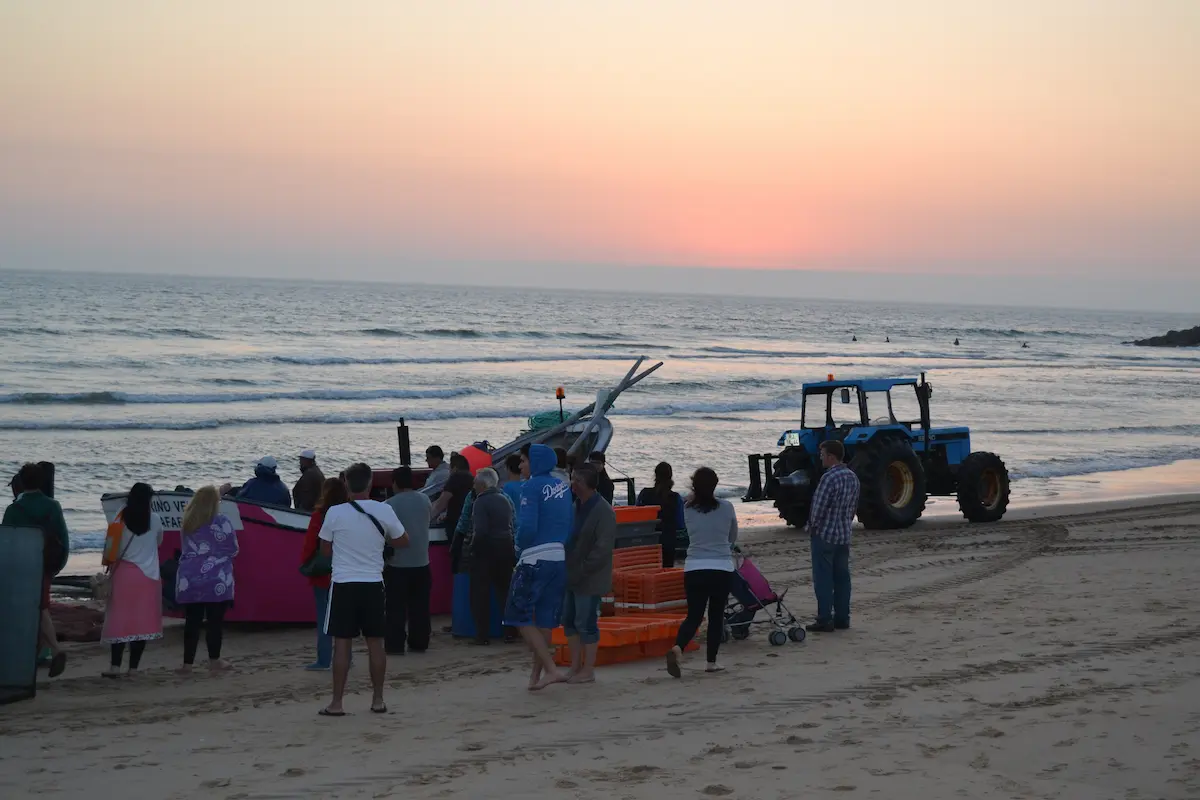
Arte xávega is one of Portugal's oldest fishing traditions, and it's still practised on this coast. A wooden boat called a meia-lua heads out to sea at dawn, drops a large net in a wide arc, and then the fishermen — today with a tractor, historically with oxen — spend hours pulling the net back to the shore.
When the net arrives, there's always a moment of suspense. What came in?
It still happens on certain Caparica beaches. It's not staged for tourists — it's the real work of a fishing community that has survived modernisation. If you happen to catch it, stay. It's worth it.
6. Atlantic Sunset — It Really Is That Good
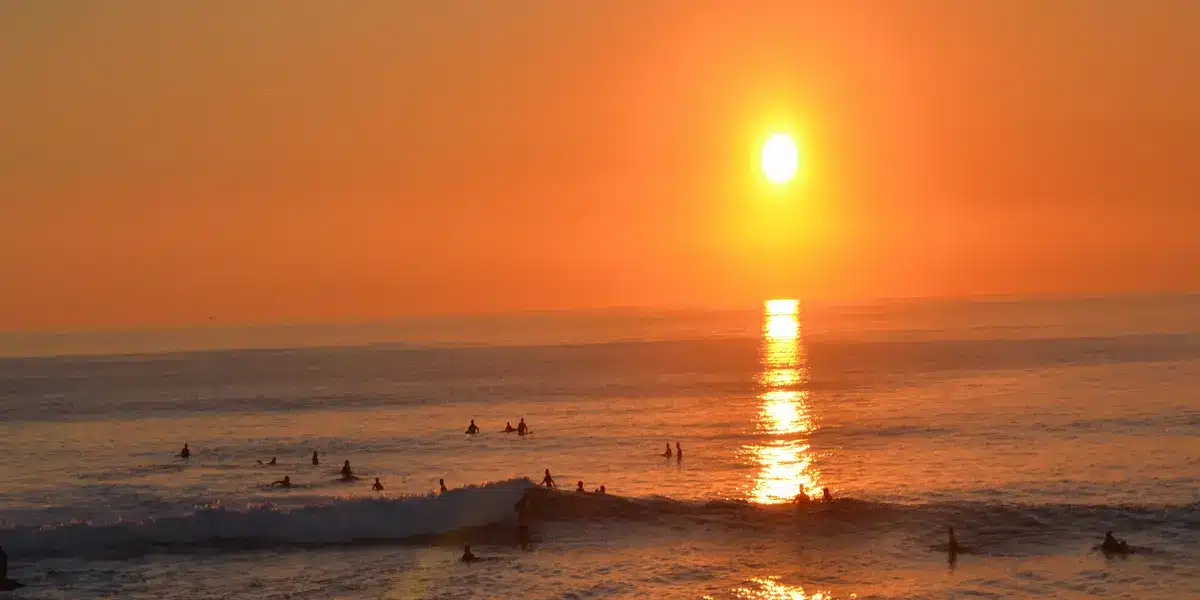
It sounds like a cliché, but anyone who's watched the sun go down into the Atlantic from Caparica knows it's not. The horizon here is completely open — no islands, no landmarks, nothing between the beach and South America. The sky shifts colour for twenty, thirty minutes — orange, pink, deep red — and reflects off the wet sand at low tide.
Best way to watch it? On the beach, barefoot. Works equally well with beer, wine, or coffee. And it's free.
7. MOGA Festival — Three Days Unlike Anything Else
The MOGA Festival is difficult to categorise. It started in Morocco, draws on Mediterranean and North African culture, and when it landed in Caparica it brought with it a mix of quality electronic music, art installations, thoughtful food, and an atmosphere that's hard to find at other Portuguese festivals.
It usually takes place between June and July, with the ocean as a permanent backdrop. The line-up is international, the vibe is more contained than large-scale festivals, and the nights have a quality that sticks with you.
Tickets tend to sell out in advance. Follow MOGA's official channels for dates and early access.
8. Mata Nacional dos Medos — The Hidden Green Lung
Between Caparica and Lagoa de Albufeira there's a large, protected pine forest with marked trails that most visitors never find. The Mata Nacional dos Medos is ideal for walking, running, cycling, or simply spending a quiet morning away from the beach crowds.
The biodiversity is surprising for somewhere this close to a city. Flora and fauna that have largely disappeared from the rest of the Portuguese coast are still present here. Worth a morning.
9. Fresh Fish — The Simplest Things Are the Best
The restaurant scene in Caparica has improved a lot in recent years, but what remains the best is also the most straightforward: fresh catch of the day, grilled, with a salad and bread. In the smaller, local tascas along the shore, fried horse mackerel is an institution. Grilled sole, when available, needs nothing added.
Sit close to the sea, don't worry about the bill, and eat slowly. That's how you eat well in Caparica.
10. Doing Absolutely Nothing
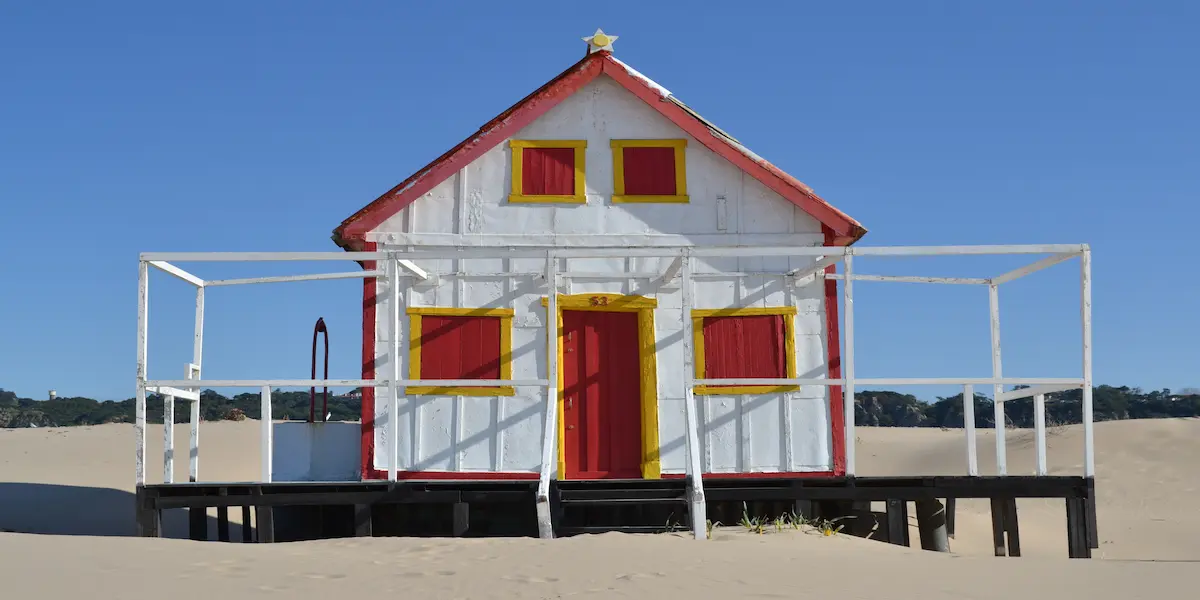
With over 30 km of beach, there's always a quiet spot even in August. Caparica still has that slower rhythm that's disappearing from other coastal destinations — and that, counterintuitively, is a rare quality.
Sometimes the best thing a place can offer is the space to stop. Costa da Caparica is generous with that.
Getting to Costa da Caparica
By car: Via the A2, crossing the 25 de Abril Bridge from Lisbon. Around 25–30 minutes from the city centre, depending on traffic.
By public transport: From Cais do Sodré to Cacilhas, then a direct bus to Caparica (lines 124 or 135). Or the Fertagus train to Pragal station with a connecting bus. The ferry option adds views of the Tagus — not the fastest, but worth it.
Best time to visit: May to October for swimming. September and October are underrated — the water is still warm, the beaches are quieter, and surf conditions are often better than in peak summer.
Frequently Asked Questions
Is Costa da Caparica far from Lisbon? No. It's about 25 to 30 minutes by car from central Lisbon, or 45 to 60 minutes by public transport (ferry + bus).
Can I learn to surf in Costa da Caparica with no experience? Yes. Caparica's beaches have ideal conditions for beginners — sandy bottom, manageable waves and plenty of space. At Gecko Surf School we offer lessons for anyone who has never set foot on a board.
What is the best time to visit Costa da Caparica? June to September for beach weather and warmer water. September and October are great for surf — fewer crowds, good waves, and the sea is still warm.
The MOGA Festival usually takes place between June and July in Costa da Caparica. It's an electronic music festival with Mediterranean and North African influences, featuring an international line-up against an Atlantic backdrop. Tickets sell out — check mogafestival.com for date
Where can I rent an e-bike in Costa da Caparica? Gecko Bike Tours offers e-bike rentals by the day, with the option of a guided tour or independent exploration. Book at geckobiketours.com.
Article written by the Gecko Surf School team. We live and work in Costa da Caparica — we know what we're talking about.